
Accepting Disruption: The Mindset Shift That Severs Your Constant Need for Control
🎧 Listen on Apple Podcasts | 🟢 Listen on Spotify
EXECUTIVE BRIEFING (30-SECOND READ)
The Core Trap: Operating on the lie that you must maintain total control over your environment at all times, which traps you as a high-stress chaos coordinator running on pure luck.
The Curated Fix: Apply environmental science principles by balancing technical Mitigation (preventing high-cost failures) with operational Adaptation (adjusting processes to absorb reality when events occur).
Next Step: Take the free 3-Minute Two-Week Vacation Test.
The Control Trap: When ‘disaster’ strikes.
If you have been in business for any amount of time, you have experienced some sort of ‘disaster’ which disrupts your business and can send you spiraling. No one likes this feeling of loss of control. How do we learn to prepare for disruption and accept that some things are simply out of our control at the same time?
Yesterday, my entire area lost internet and cell service mid-call with a client. I soon realized that without internet I could do no work and I had no way to contact my client because I have such poor cellular service at my home. It brought up a debate with my husband about having backups to be prepared for these situations. He thought every business running should plan for all of these situations, whereas I didn't think it was necessary. The truth is, both of us were right.
We need to prepare for possible scenarios, but we also have to accept that disruption is inevitable. Coming up with a backup internet solution costs me more than the risk of not having it. How often does the internet failure actually happen? Very rarely. How much does a disruption cost me? Almost nothing. I'm able to still retain my relationship with the client because they understand that some disruption is inevitable. Trying to fight my reality by driving all over town when no other place in town has internet would have just caused more stress and accomplished nothing.
When facing ‘disasters’ in our business we can take a lesson from climate change policy and use a combination of mitigation and adaptation. For mitigation we look to prevent the problem as much as possible. With adaptation we are accepting the problem and adjusting our responses.
The System: 3 Steps for Operational Freedom from Disruptions
Step 1: Decide which disasters you can prevent and which ones you can adapt to
The risk response matrix helps you decide when to use mitigation strategies and when to use adaptation strategies. Because we face a range of potential disasters for our business, we need to evaluate the impact and likelihood of the risk to inform our response. This practice keeps you from cutting into profits unnecessarily but also protects those profits when ‘disaster’ strikes.
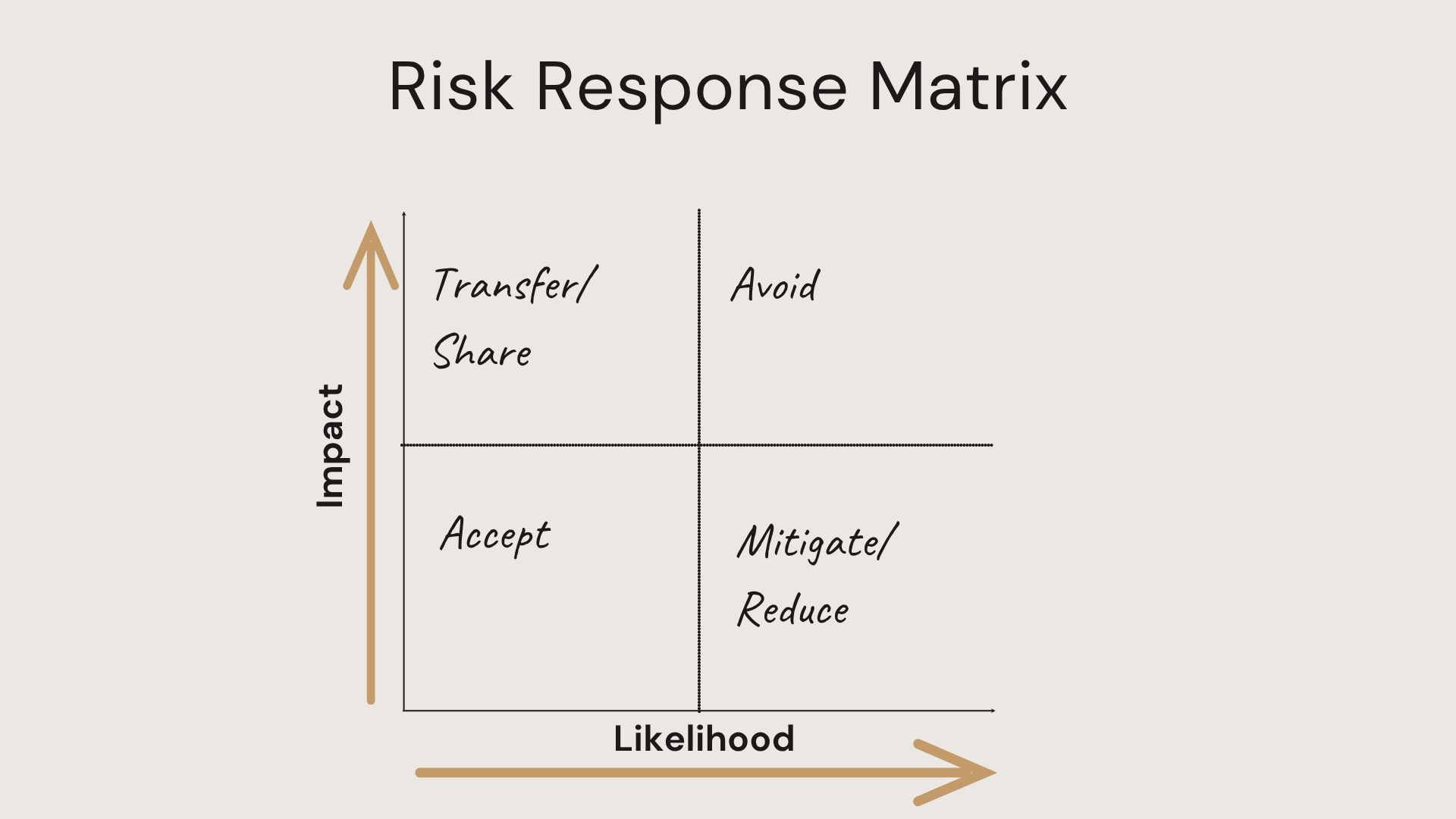
High Likelihood / High Impact: Avoid or mitigate the situation. For example, I avoid planning live events in Florida during hurricane season.
High Impact / Low Likelihood: Transfer that risk through insurance, such as cyber insurance or disaster coverage to protect you in case someone sues you over a failure of ADA website compliance.
Low Impact / Low Likelihood: Accept it and deal with those changes, just like my regional internet outage. It doesn't happen often and costs almost nothing in lost revenue. It is not worth spending time or money on these.
High Likelihood / Low Impact: Reduce the impact as much as you can by finding ways to mitigate the root causes. Once you find the root causes you can look for other solutions.
Step 2: Establish Standard Operating Procedures for Mitigation (preventing disruptions)
When you identify high-risk, high-cost scenarios, you can build a clear plan to avoid most disruptions to your business.
Identify Core Risks: Host an annual team meeting with your leadership to identify the specific risks that require mitigation or avoidance using the risk response matrix in step one. Try to determine root causes so that you can avoid as many disruptions as possible.
Create and use SOPs: Create standard operating procedures so everyone knows how to respond. A simple checklist can help avoid many problems, which is why they have become necessary for airline pilots and surgeons.
Set Up Emergency Protocols: When I worked for the Peace Corps headquarters, we created emergency plans for different kinds of disasters so volunteers and staff knew the exact protocol to follow without needing real-time permission. Thinking through disasters helps prevent them. Studies have shown that when people study the airplane emergency procedures, they're less likely to die in an airplane crash.
Step 3: Build Adaptability Into Your Operations
For disruptions out of your control, learn to adapt by building multiple systems and options:
Diversify Channels: Build multiple marketing streams or supply lines. For example, if Facebook goes down, having a multi-channel social media or website presence ensures clients can still connect with you.
Embrace Continuous Improvement: Train your team to constantly look forward, pay attention to surrounding issues, and adapt through regular meetings.
Accept Reality or Fail: Companies that refuse to accept reality and adapt to it fail, just like Blockbuster going out of business because they refused to accept that people wanted to watch videos virtually.
Field Observation: What This Looks Like in Practice
When my internet went out yesterday, I knew it wasn't a high risk and it wasn't going to have a huge impact on my business. Instead of panicking or fighting the situation, I used that opportunity to adapt. None of my kids knew what to do without internet for homework or entertainment, so we enjoyed the time talking to each other.
Instead of being trapped in a stress response, I caught up on reading a book, made the best of the situation, and today it's back to business as usual. When you build adaptability into your operations, you move from a frantic chaos coordinator to a systematized CEO who can roll with the punches.
Is Your Business Trapped in Daily Execution?
A regional blackout is just a mini stress test on your business. If you can't deal with or don't know how to deal with these kinds of instances, reach out to me.